

Facade Lighting Design – Techniques for Modern Buildings
Facade lighting design plays a crucial role in defining how buildings are perceived after sunset. While architecture shapes the form and structure of a building during the day, facade lighting transforms that architecture at night, highlighting textures, revealing depth and creating iconic visual identities for buildings.
Today, facade lighting is an essential component of architectural design for luxury residences, hotels, commercial buildings, heritage monuments and public landmarks. With the evolution of LED technology, lighting control systems and dynamic lighting solutions, designers now have unprecedented flexibility to create visually compelling and energy-efficient building exteriors.
This comprehensive guide explores the principles, techniques and technologies used in facade lighting design, along with practical insights for architects, lighting designers and developers.
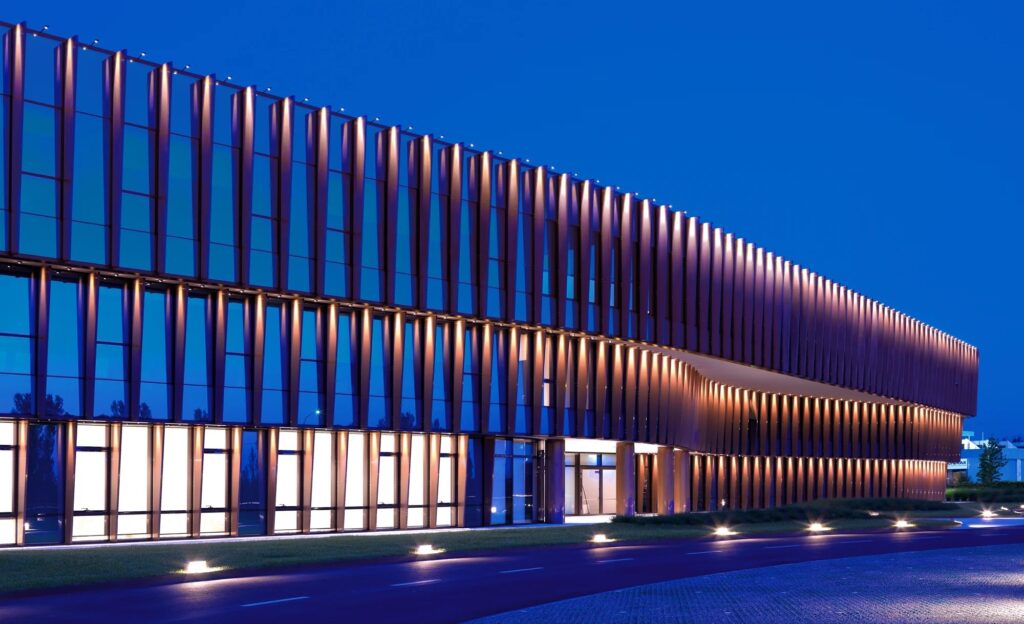
What is Facade Lighting Design?
Facade lighting design refers to the strategic illumination of building exteriors to enhance architectural form, highlight materials and create visual impact at night. It is an important element of architectural lighting design.
Unlike conventional outdoor lighting, facade lighting focuses on:
- highlighting architectural features
- enhancing the building’s nighttime identity
- creating visual depth and contrast
- improving safety and orientation
- strengthening the brand image of buildings
Facade lighting is widely used in:
- luxury hotels
- museums and cultural institutions
- high-rise commercial buildings
- public infrastructure
- heritage monuments
Well-designed facade lighting can transform a building into a nighttime landmark.
Importance of Facade Lighting in Architecture
Facade lighting has become a key design element in contemporary architecture.
Enhancing Architectural Expression
Lighting allows architects to reveal the true character of building materials such as stone, concrete, metal and glass. By carefully directing light across surfaces, designers can emphasise textures and patterns.
For example:
- grazing light enhances stone textures
- wall washing highlights smooth surfaces
- silhouette lighting reveals architectural forms
These techniques allow buildings to maintain a strong visual presence even after sunset.
Creating Nighttime Identity
Many iconic buildings are recognised not only by their architecture but also by their nighttime lighting.
Well-known examples include:
- illuminated museums
- dynamically lit skyscrapers
- heritage monuments with dramatic lighting
Lighting allows buildings to communicate identity and prestige within urban environments.
Improving Safety and Visibility
Facade lighting contributes to public safety by improving visibility around building entrances, pathways and surrounding areas.
Properly illuminated buildings also create a sense of security in urban environments.
Strengthening Brand Image
Hotels, corporate headquarters and commercial buildings often use facade lighting to reinforce brand identity.
Dynamic lighting systems can change colours for:
- national events
- festivals
- corporate branding campaigns
Advanced lighting automation platforms from various companies allow building operators to manage such lighting programs efficiently.
Key Principles of Facade Lighting Design
Successful facade lighting design follows several core principles.
Understanding Architectural Intent
Before designing lighting, it is essential to understand the architectural vision of the building.
Questions designers must consider include:
- What are the key architectural features?
- Which elements should be highlighted?
- How should the building appear at night?
Lighting should complement architecture rather than overpower it.
Balancing Light and Shadow
One of the most important aspects of facade lighting is the balance between light and shadow.
Too much lighting can flatten architectural surfaces, while carefully placed lighting creates contrast and depth.
Good lighting design uses shadows strategically to reveal texture and form.
Controlling Glare
Poorly designed facade lighting can create glare that distracts viewers and reduces visual comfort.
Designers must carefully select fixtures with appropriate beam angles and shielding to prevent direct glare.
Energy Efficiency
Modern facade lighting systems must also prioritise energy efficiency.
LED lighting combined with smart lighting controls can dramatically reduce energy consumption while maintaining high visual performance.
Automation systems based on standards like KNX are often used in advanced lighting installations.
Major Facade Lighting Techniques
Several lighting techniques are commonly used to illuminate building facades.
Wall Washing
Wall washing is one of the most widely used facade lighting techniques.
In this method, luminaires are positioned at a distance from the wall to produce even illumination across large vertical surfaces.
Wall washing is commonly used for:
- museums
- office buildings
- hotels
- retail facades
The technique works best on smooth surfaces where uniform lighting enhances the architectural form.
Wall Grazing
Wall grazing involves placing luminaires very close to the wall surface.
This creates strong shadows that emphasise surface textures.
Wall grazing works particularly well with:
- natural stone
- brick surfaces
- textured concrete panels
It is frequently used in luxury architecture and heritage buildings.
Accent Lighting
Accent lighting highlights specific architectural features such as:
- columns
- sculptures
- entrance portals
- decorative panels
This technique creates visual hierarchy by directing attention to focal points.
Silhouette Lighting
Silhouette lighting places light sources behind architectural elements to create dramatic outlines.
This technique is commonly used to highlight:
- statues
- architectural screens
- perforated facades
Silhouette lighting produces a striking visual effect.
Uplighting
Uplighting directs light upward from ground-level fixtures.
This method is commonly used for:
- columns
- building facades
- trees and landscape elements
Uplighting is widely used in luxury residential architecture and hospitality projects.
Dynamic Facade Lighting
Modern architectural lighting increasingly incorporates dynamic lighting technologies.
Dynamic lighting allows buildings to change colour, brightness and lighting patterns in real time.
Applications include:
- media facades
- RGB lighting installations
- programmable lighting displays
Dynamic lighting systems often use DMX control protocols and advanced lighting control platforms.
Building automation systems developed by companies like ABB can integrate facade lighting with broader smart building infrastructure.
Lighting Fixtures Used in Facade Lighting
Selecting the right lighting fixtures is critical for facade lighting performance.
Common luminaire types include:
- LED wall washers
- linear LED luminaires
- spotlights and projectors
- recessed ground lights
- facade grazing luminaires
LED lighting technology offers several advantages:
- high energy efficiency
- long lifespan
- flexible colour control
- compact fixture design
Many modern luminaires are designed specifically for architectural facade lighting applications.
Lighting Control Systems for Facade Lighting
Lighting control systems play a vital role in managing facade lighting installations.
Control systems enable designers to:
- dim lighting levels
- program lighting scenes
- automate lighting schedules
- coordinate dynamic lighting effects
Smart lighting automation systems allow building operators to easily adjust facade lighting programs.
For example, lighting can automatically adjust based on:
- sunset and sunrise times
- special events
- building occupancy patterns
Wireless lighting control platforms such as Casambi are also becoming popular in architectural lighting projects.
Smart Lighting Automation for Building Facades
Smart lighting automation is transforming facade lighting design.
Automation platforms allow centralised control over large lighting installations, making it easier to manage complex lighting programs.
Features typically include:
- smartphone control
- scheduling and automation
- scene programming
- remote monitoring
Many lighting automation systems integrate with broader smart building ecosystems provided by companies such as Signify.
Such integration enables buildings to operate as intelligent environments.
Lighting Simulation and Design Tools
Professional lighting designers rely on simulation software to analyse lighting performance before installation.
Lighting simulation allows designers to evaluate:
- illumination levels
- beam distribution
- glare control
- energy performance
One widely used simulation tool is DIALux evo.
Lighting simulation helps ensure that facade lighting concepts translate accurately into real-world installations.
Facade Lighting for Heritage Buildings
Lighting heritage structures requires special sensitivity to architectural history and preservation guidelines.
Designers must ensure that lighting:
- enhances architectural beauty
- respects historical integrity
- avoids damaging materials
Common techniques for heritage lighting include:
- warm colour temperature lighting
- concealed fixtures
- low-intensity accent lighting
Properly designed heritage lighting can transform monuments into iconic nighttime landmarks.
Facade Lighting for Luxury Residential Projects
Facade lighting is increasingly used in luxury villas and high-end residential architecture.
Residential facade lighting typically focuses on:
- subtle architectural highlighting
- entrance illumination
- landscape integration
Lighting is often integrated with smart home automation systems to allow homeowners to control lighting scenes.
Many luxury homes use building automation systems based on KNX for lighting and smart home control.
Sustainability in Facade Lighting Design
Sustainability is an important consideration in modern architectural lighting.
Designers use several strategies to reduce energy consumption:
- high-efficiency LED luminaires
- automated lighting schedules
- dimming controls
- daylight-sensitive sensors
Energy-efficient lighting solutions contribute to green building certifications such as LEED and BREEAM.
Future Trends in Facade Lighting
Facade lighting technology continues to evolve rapidly.
Emerging trends include:
- interactive media facades
- AI-driven lighting automation
- IoT-connected lighting systems
- human-centric outdoor lighting
These technologies will allow buildings to become more responsive to environmental conditions and human needs.
Conclusion
Facade lighting design has become a defining element of modern architecture. By carefully integrating lighting with architectural form, designers can transform buildings into visually striking landmarks that enhance urban environments.
Successful facade lighting requires a balance between aesthetics, functionality and energy efficiency. By applying proven lighting techniques such as wall washing, grazing, accent lighting and dynamic illumination, designers can reveal the full beauty of architectural structures after dark.
Advances in LED technology, lighting control systems and smart building automation have opened new possibilities for innovative lighting design. As architecture continues to evolve, facade lighting will play an increasingly important role in shaping the nighttime identity of cities around the world.
For architects, developers and lighting professionals, investing in well-designed facade lighting is essential to creating memorable and sustainable architectural experiences
Frequently Asked Questions About Facade Lighting Design
What is facade lighting in architecture?
Facade lighting refers to the illumination of the exterior surfaces of buildings to enhance architectural features, improve nighttime visibility and create visual impact. Architectural facade lighting highlights textures, materials and structural elements while giving buildings a distinctive nighttime identity.
Why is facade lighting important for buildings?
Facade lighting enhances the visual appeal of buildings at night, improves safety around entrances and walkways, and helps create a strong architectural presence. Well-designed facade lighting also contributes to branding for hotels, commercial buildings and landmarks.
What are the main techniques used in facade lighting design?
Common facade lighting techniques include wall washing, wall grazing, accent lighting, silhouette lighting and uplighting. These methods help highlight architectural features and create visual depth on building surfaces.
What is wall washing in facade lighting?
Wall washing is a lighting technique where luminaires are positioned at a distance from the wall to create smooth and uniform illumination across large vertical surfaces. It is commonly used for commercial buildings, museums and hotels.
What is wall grazing in architectural lighting?
Wall grazing involves placing luminaires very close to a wall surface to emphasise texture through shadows and highlights. This technique works particularly well with materials such as stone, brick and textured concrete.
What type of lighting fixtures are used for facade lighting?
Facade lighting typically uses LED wall washers, spotlights, linear luminaires, recessed ground lights and architectural projectors. LED fixtures are preferred due to their energy efficiency, long lifespan and flexible beam control.
Can facade lighting be automated?
Yes, facade lighting systems can be automated using lighting control systems. Automation allows building operators to schedule lighting operations, dim lighting levels and create dynamic lighting scenes using smart building platforms.
Modern automation standards such as DMX are widely used in architectural lighting projects.
What is dynamic facade lighting?
Dynamic facade lighting uses programmable lighting systems that can change colours, brightness and lighting patterns in real time. These systems are commonly used for landmark buildings, entertainment venues and media facades.
Is facade lighting energy efficient?
Modern facade lighting systems using LED technology are highly energy efficient. When combined with smart lighting controls and automation systems, energy consumption can be significantly reduced while maintaining visual impact.