

Lighting Control Systems for Buildings – Smart Lighting Guide
Lighting control systems are becoming an essential part of architectural lighting design in modern buildings. From luxury homes and villas to commercial offices, hotels and large infrastructure projects, intelligent lighting control allows buildings to operate more efficiently while improving user comfort and flexibility.
A well-designed lighting control system enables users to adjust brightness levels, automate lighting schedules, create lighting scenes and integrate lighting with broader building automation systems.
This comprehensive guide explains how lighting control systems work, the different technologies available, and how architects and designers integrate them into modern building projects.
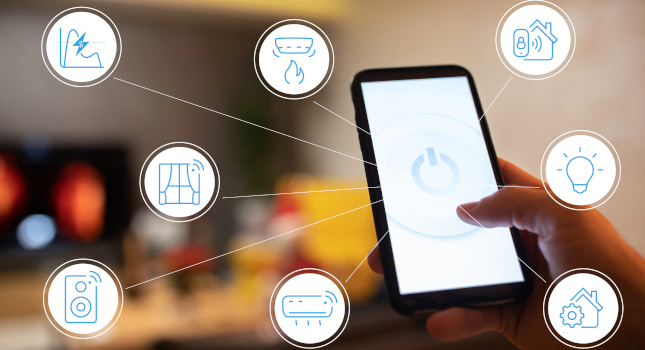
What is a Lighting Control System?
A lighting control system is a network of devices that allows lighting fixtures to be controlled automatically or manually through sensors, switches, controllers and software.
Instead of simple on/off switching, modern lighting control systems enable advanced functions such as:
- dimming lights
- controlling groups of luminaires
- creating lighting scenes
- scheduling lighting operations
- integrating lighting with smart home automation systems
These systems are widely used in luxury residential projects, office buildings, hotels, museums and public infrastructure.
By optimising lighting performance and reducing unnecessary energy consumption, lighting control systems also contribute significantly to energy efficiency and sustainability goals in buildings.
Why Lighting Control Systems Are Important in Modern Buildings
The role of lighting control systems has expanded significantly in recent years due to the growth of smart building technologies and energy efficiency regulations.
Energy Efficiency
Lighting typically accounts for a large portion of electricity consumption in buildings. Automated lighting controls can reduce energy use by:
- dimming lights when daylight is available
- switching off lights when spaces are unoccupied
- adjusting brightness levels based on activity
These measures can significantly reduce operating costs.
Improved User Experience
Lighting control systems allow users to customise lighting conditions for different activities.
For example:
- relaxing lighting for living rooms
- bright lighting for workspaces
- ambient lighting for dining areas
Such flexibility is particularly important in luxury residential lighting design.
Automation and Smart Buildings
Lighting controls are often integrated with building automation systems, enabling intelligent management of lighting along with:
- HVAC systems
- window shading
- security systems
- energy management systems
Building automation technologies based on standards such as KNX are widely used in modern smart buildings.
Types of Lighting Control Systems
Lighting control systems can be classified into several categories depending on how they are implemented.
Manual Lighting Control
Manual control is the simplest form of lighting control and includes traditional switches and dimmers.
Although basic, modern manual controls can still offer features such as:
- dimming functionality
- multi-scene control
- programmable wall keypads
These systems are common in smaller residential projects.
Automated Lighting Control
Automated lighting systems use sensors and programmed logic to control lighting without manual intervention.
Examples include:
- motion sensors
- occupancy sensors
- daylight sensors
When integrated properly, automated lighting controls significantly improve energy efficiency.
Centralised Lighting Control Systems
In a centralised lighting control system, lighting circuits are connected to a central controller.
All lighting commands are processed from a central panel or server.
Advantages include:
- easier monitoring and maintenance
- centralised programming
- simplified integration with building management systems
Centralised systems are commonly used in commercial buildings and hotels.
Distributed Lighting Control Systems
Distributed systems place control modules near the lighting fixtures rather than at a central panel.
Each module controls a small number of fixtures.
Advantages include:
- improved scalability
- easier expansion
- reduced wiring complexity
Many modern lighting control systems follow a distributed architecture.
Smart Lighting Automation Systems
Smart lighting automation systems are designed to provide intuitive control over lighting through digital interfaces.
Users can control lighting via:
- mobile apps
- touch panels
- voice assistants
- programmable wall switches
These systems are widely used in luxury villas and smart homes.
Leading automation platforms such as those developed by Lutron Electronics offer advanced lighting scene control and integration with home automation ecosystems.
Lighting Control Protocols and Standards
Lighting control systems rely on communication protocols that allow devices to interact with each other.
These protocols ensure interoperability between different lighting devices.
KNX Building Automation Standard
One of the most widely adopted building automation standards is KNX.
KNX is an open protocol used for controlling:
- lighting systems
- HVAC systems
- blinds and curtains
- energy management systems
Advantages of KNX include:
- compatibility with multiple manufacturers
- high reliability
- scalability for large projects
KNX is particularly popular in luxury residential projects and commercial buildings.
DALI Lighting Control — The Professional Standard for Commercial Buildings
DALI (Digital Addressable Lighting Interface) is the most widely specified lighting control protocol in professional architectural projects worldwide. It was developed specifically for the lighting industry — unlike KNX, which controls entire buildings, DALI is purpose-built for luminaires. This focus makes it exceptionally capable for professional lighting specification.
How DALI Works
DALI operates on a two-wire communication bus that runs alongside the power wiring to each fixture. Every DALI-compatible driver or fixture has a unique address, allowing the control system to communicate with each luminaire individually.
This individual addressing is what separates DALI fundamentally from older, simpler control methods like 0-10V dimming, where an entire circuit of luminaires dims together with no ability to address individual fixtures.
With DALI, a lighting designer can:
• Dim a single luminaire independently of every other fixture in the building
• Group fixtures into zones that cut across electrical circuits — meaning a lighting zone can include luminaires on different circuit breakers
• Recall scenes instantly across any combination of fixtures
• Receive status feedback from each fixture — whether it’s on, at what level, and whether the lamp or driver has a fault
• Reassign fixtures to different groups and scenes without touching the wiring
That last point is critical for commercial projects. In a typical office fit-out, the tenant changes the floor plan layout within 18 months. With DALI, regrouping luminaires for a new partition arrangement takes a commissioning engineer 30 minutes with a laptop. With a traditional wired circuit approach, it requires an electrician to physically rewire.
DALI System Architecture — What Architects and Designers Need to Know
A single DALI network, called a DALI line or bus, supports a maximum of 64 individually addressable devices. This is a hard limit built into the protocol.
For larger installations, multiple DALI lines are used — each controlled by its own DALI master or controller. A large commercial floor plate of 2,000 sqft with 120 fixtures would typically require two DALI lines, each managing 60 fixtures, both reporting to a central lighting management system.
The key components in a DALI system:
DALI Master / Controller — the brain of each DALI line. It sends commands, stores scene information and polls fixtures for status. In a building-wide system, multiple masters connect to a central lighting management software platform.
DALI Drivers — every luminaire in a DALI system must have a DALI-compatible LED driver. This is a critical specification point. Standard non-DALI drivers will not work. When specifying fixtures for a DALI project, the driver type must be confirmed explicitly — DALI drivers carry a small cost premium but are the foundation of the entire control system’s capability.
DALI Input Devices — switches, sensors and keypads that send commands into the DALI network. Occupancy sensors, daylight sensors and scene keypads all connect as DALI input devices.
DALI vs DALI-2 — Why the Version Matters
The original DALI standard (IEC 62386 Part 1) defined how to dim and control luminaires. It worked well but had a limitation: input devices — switches and sensors — were not standardised, meaning a sensor from one manufacturer might not reliably communicate with a controller from another.
DALI-2, introduced as an update to IEC 62386, resolved this. DALI-2 standardises the behaviour of input devices across manufacturers. A DALI-2 occupancy sensor from any certified manufacturer will work predictably with a DALI-2 controller from any other manufacturer.
For architects and specifiers, the practical implication is straightforward: always specify DALI-2 for new installations. It provides genuine interoperability, avoids manufacturer lock-in, and protects the client’s investment if they need to expand or modify the system in the future.
When reviewing product specifications, look for the official DALI-2 certification mark. Products certified by the DALI Alliance have been independently tested for interoperability.
D4i — The Intelligent Layer on Top of DALI-2
D4i is a further extension of the DALI-2 standard that adds energy monitoring and asset management capability to luminaires.
A D4i-certified luminaire doesn’t just dim on command — it reports back:
• Actual power consumption in real time
• Running hours and lamp life data
• Thermal warnings before failures occur
• Light output degradation over time
This data flows back through the DALI network to a central platform where facility managers can monitor energy performance, predict maintenance schedules and generate energy reports for LEED, WELL or BREEAM documentation.
For commercial buildings pursuing green certifications, D4i makes energy metering for the lighting system significantly simpler — the data is already inside the fixture, not requiring separate sub-metering hardware.
In India, D4i adoption is still early. But for premium commercial projects pursuing sustainability certifications, specifying D4i-ready luminaires now is a forward-looking decision that adds minimal cost and significant value.
DALI in the Indian Context — What Specifiers Need to Know
DALI is well-established in Indian commercial projects but implementation quality varies significantly. Several issues are worth understanding before specifying.
Driver availability. Not all lighting manufacturers supplying the Indian market stock DALI drivers as standard. Many keep them as special-order items with 4–6 week lead times. Confirm driver availability with your supplier at the specification stage — not during installation.
Commissioning expertise. DALI systems require commissioning by someone who understands the protocol — assigning addresses, creating groups, programming scenes and testing feedback. This is not a standard electrical contractor skill in India. Factor in a specialist commissioning engineer, typically charged at ₹15,000–₹40,000 per day depending on system size and complexity.
Line length limits. The DALI bus cable has a maximum length of 300 metres and a maximum current capacity of 250mA. On large floor plates, designers must calculate whether the line length and number of devices stay within these limits. Exceeding them causes unreliable communication — a common site problem that is avoided entirely with proper design.
Compatibility checking. Despite DALI-2 standardisation, always test key fixture-controller combinations in a sample installation before full project rollout. Compatibility issues are rare with certified products but not impossible, and discovering them on site during a hotel opening week is a serious problem.
When to Specify DALI
DALI is the right choice when:
• Individual fixture control is needed — offices, museums, galleries, retail
• The installation has more than 20–30 luminaires requiring independent dimming
• Occupancy and daylight sensors need to integrate with the lighting system
• The project requires lighting status monitoring and fault reporting
• LEED, WELL or BREEAM certification is being pursued
• Integration with a building management system (BMS) is planned
DALI is less suitable when:
• The project is a simple retrofit where running new wiring is impractical — consider Casambi instead
• The requirement is purely dynamic colour-changing for facades or entertainment — DMX handles this better
• The budget doesn’t accommodate DALI driver premiums and commissioning costs — 0-10V dimming is a simpler alternative for basic dimming-only requirements
DALI and Casambi — Working Together
One of the most useful developments in recent lighting controls is the ability to combine DALI and Casambi in the same installation. A DALI network can be extended wirelessly through a Casambi DALI Gateway device, which connects an existing wired DALI system to the Casambi Bluetooth mesh.
This is particularly valuable for:
• Retrofit projects where some areas have existing DALI infrastructure
• Buildings where some zones need wired DALI reliability and others benefit from wireless flexibility
• Hospitality projects where DALI handles back-of-house and Casambi handles guest-facing areas
The DALI luminaires appear in the Casambi app as normal devices — they can be included in scenes, schedules and automations alongside native Casambi fixtures. From the user’s perspective, it’s one unified system.
DMX Lighting Control
DMX (Digital Multiplex) is primarily used in dynamic lighting installations and architectural facade lighting.
DMX systems allow precise control of:
- colour changing lights
- RGB lighting systems
- media facades
DMX is commonly used for landmark buildings, entertainment venues and architectural lighting installations.
Wireless Lighting Control Systems
Wireless lighting control systems are becoming increasingly popular in modern buildings because they reduce the need for complex wiring infrastructure. Instead of using dedicated control cables, these systems communicate through wireless technologies such as Bluetooth, Wi-Fi or proprietary radio protocols.
Wireless lighting controls are particularly useful for:
- retrofit projects where rewiring is difficult
- luxury residential renovations
- hospitality spaces
- retail lighting installations
- small and medium commercial projects
By eliminating the need for extensive wiring, wireless systems can significantly reduce installation time and costs while still providing advanced lighting automation features.
Advantages of Wireless Lighting Controls
Wireless lighting control systems offer several benefits compared to traditional wired automation systems.
Faster Installation
Since no dedicated control cables are required, wireless systems can be installed much more quickly, making them ideal for renovation projects.
Scalability
Wireless networks allow lighting systems to be easily expanded by adding new fixtures or controllers without major infrastructure changes.
Remote Access
Many wireless lighting systems can be controlled using mobile apps, enabling users to manage lighting scenes, schedules and dimming levels from anywhere.
Cost Efficiency
The reduction in cabling and installation complexity often results in lower overall project costs.
Casambi Wireless Lighting Control
One of the most widely used wireless lighting control platforms is Casambi.
Casambi uses Bluetooth Low Energy (BLE) technology to create a mesh network where each lighting fixture acts as a communication node. This allows the system to operate without a central gateway while maintaining reliable communication between devices.
Key features of Casambi systems include:
- wireless dimming control
- scene programming
- scheduling and automation
- smartphone and tablet control
- integration with luminaires and LED drivers
Casambi is particularly popular in architectural lighting, hospitality projects and facade lighting installations due to its flexibility and ease of deployment.
Consumer Grade Systems – Tuya Smart Lighting Systems
Another widely adopted wireless automation ecosystem is Tuya Smart, although used for consumer segment mostly – rarely in specification projects.
Tuya provides a cloud-based IoT platform that enables manufacturers to create smart lighting products compatible with mobile apps and voice assistants.
Tuya-based lighting systems typically operate using Wi-Fi or Zigbee connectivity and allow users to control lighting through:
- smartphone applications
- voice assistants such as Alexa or Google Assistant
- smart home automation routines
Tuya platforms are commonly used in consumer smart lighting products and entry-level home automation systems.
Wired vs Wireless Lighting Control Systems
Both wired and wireless lighting control systems have their advantages depending on project requirements.
Wired systems such as those based on KNX are often preferred for large commercial buildings and luxury residential projects due to their reliability and scalability.
Wireless systems, on the other hand, are ideal for retrofit installations and smaller projects where running additional wiring may not be practical.
Many modern buildings use hybrid lighting control architectures that combine wired infrastructure with wireless extensions for maximum flexibility.
Future of Wireless Lighting Automation
Wireless lighting control technologies are evolving rapidly with the growth of IoT-based smart building platforms. Improvements in wireless communication reliability, device interoperability and cloud connectivity are making wireless lighting systems increasingly viable for larger architectural projects.
As smart building technologies continue to advance, wireless lighting controls will play a major role in enabling flexible and scalable lighting automation systems across residential, hospitality and commercial environments.
Components of a Lighting Control System
A complete lighting control system consists of several interconnected components.
Lighting Controllers
Controllers are the brain of the lighting control system. They process commands and communicate with other devices.
Controllers can be:
- hardware control modules
- software-based control systems
- integrated building automation controllers
Sensors
Sensors help automate lighting operation.
Common sensors include:
- occupancy sensors
- motion sensors
- daylight sensors
Sensors enable lighting systems to adjust automatically based on environmental conditions.
Control Interfaces
Users interact with lighting systems through control interfaces such as:
- wall switches
- touch panels
- smartphone apps
These interfaces allow users to activate pre-programmed lighting scenes.
Dimming Devices
Dimmers allow users to adjust lighting brightness.
Modern dimming technologies include:
- phase cut dimming
- digital dimming systems
- DALI dimming
Dimming plays a critical role in creating comfortable lighting environments.
Lighting Scenes and Mood Lighting
Lighting scenes allow multiple lights to be controlled simultaneously using a single command.
For example, a “Movie Mode” lighting scene might:
- dim ambient lighting
- switch off accent lighting
- activate subtle wall lighting
Lighting scenes are widely used in luxury residential projects and hospitality environments.
Lighting Control for Luxury Homes and Villas
In high-end residential projects, lighting control systems are often integrated with complete smart home platforms.
These systems allow homeowners to control:
- lighting
- climate systems
- entertainment systems
- security
Automation platforms such as those from Lutron Electronics are commonly used in luxury homes due to their reliability and intuitive user interfaces.
Smart lighting automation significantly enhances the lifestyle experience in luxury residences.
Lighting Control in Commercial Buildings
Commercial buildings rely heavily on lighting control systems to improve operational efficiency.
Applications include:
- office lighting automation
- meeting room lighting control
- retail lighting management
- hotel guest room automation
Advanced lighting systems can be integrated with building management systems provided by companies such as Schneider Electric.
These integrated systems help optimise building performance and energy usage.
Integration with Building Automation Systems
Lighting control systems are often integrated into larger smart building ecosystems.
Integration allows lighting to interact with:
- HVAC systems
- window blinds
- occupancy sensors
- security systems
Integrated building automation platforms developed by companies such as ABB enable centralised monitoring and control of building systems.
Such integration helps create highly efficient intelligent buildings.
Energy Savings Through Lighting Controls
Energy efficiency is one of the major advantages of lighting control systems.
Lighting automation can reduce energy consumption by:
- automatically switching off unused lighting
- dimming lights based on daylight levels
- adjusting brightness levels based on occupancy
These strategies can reduce lighting energy consumption by 30–60% in many buildings.
Lighting Simulation and Planning
Professional lighting design often involves simulation tools to evaluate lighting performance before installation.
Software such as DIALux evo allows designers to simulate lighting layouts and ensure compliance with illumination standards.
Lighting simulation helps designers optimise fixture placement and lighting control strategies.
Future Trends in Lighting Control Systems
Lighting control technology continues to evolve rapidly as buildings become smarter and more connected.
Key trends shaping the future include:
- IoT-enabled lighting systems
- wireless lighting control networks
- AI-driven building automation
- human-centric lighting systems
These innovations will make lighting systems more responsive, efficient and adaptable to human needs.
Conclusion
Lighting control systems have become an essential component of modern architectural lighting design. By enabling intelligent control over lighting fixtures, these systems enhance energy efficiency, improve user comfort and allow flexible lighting experiences.
From luxury homes and villas to large commercial buildings, lighting automation is transforming the way buildings operate. Open standards such as KNX and advanced automation platforms from companies like Lutron Electronics have made it easier than ever to implement sophisticated lighting control strategies.
As smart building technologies continue to evolve, lighting control systems will play an increasingly important role in creating sustainable, efficient and visually compelling built environments.
For architects, designers and developers, investing in intelligent lighting control systems is a key step toward building the next generation of smart buildings.
In our experience specifying lighting controls across hospitality, office and facade projects in India, the biggest mistake customers/developers make is choosing a control system based on cost alone. A cheap 0-10V dimming system specified to save money at tender will cost significantly more in inflexibility and retrofitting when the client changes the space layout two years later — which they always do.
Frequently Asked Questions About Lighting Control Systems
What is a lighting control system?
A lighting control system allows lighting fixtures to be automatically or manually controlled through sensors, switches and automation software. These systems help improve energy efficiency and user comfort in buildings.
How do lighting control systems work?
Lighting control systems use controllers, sensors and communication protocols to manage lighting levels. Users can control lighting through switches, apps or automated schedules.
What are the benefits of smart lighting control?
Smart lighting control systems improve energy efficiency, allow lighting automation, create lighting scenes and enhance user comfort in residential and commercial buildings.
What is the difference between wired and wireless lighting control?
Wired lighting control systems use dedicated communication cables, while wireless systems communicate using Bluetooth, Wi-Fi or radio networks.
What is a KNX lighting control system?
A KNX lighting control system is an open building automation standard used for controlling lighting, HVAC, blinds and other building systems.
What is Casambi lighting control?
Casambi is a wireless lighting control platform that uses Bluetooth mesh technology to enable lighting automation without additional control wiring.
What is DALI lighting control?
DALI stands for Digital Addressable Lighting Interface – is a protocol used to control individual lighting fixtures and dimming levels within lighting installations.
Are wireless lighting control systems reliable?
Modern wireless lighting control systems are highly reliable and are widely used in residential and commercial lighting automation projects.
Can lighting control systems save energy?
Yes. Lighting control systems can reduce energy consumption by automatically dimming lights, switching off unused lighting and optimising lighting levels.
Are lighting control systems suitable for homes?
Yes. Lighting control systems are widely used in luxury homes and villas to create lighting scenes, automate lighting schedules and integrate with smart home systems.